Empty Chairs Cost You $2,000 a Month. Here's the Fix.
No-shows and late cancellations quietly drain thousands from small salons every month. Here's what's causing it and how to stop it for good.
Empty Chairs Cost You $2,000 a Month. Here's the Fix.
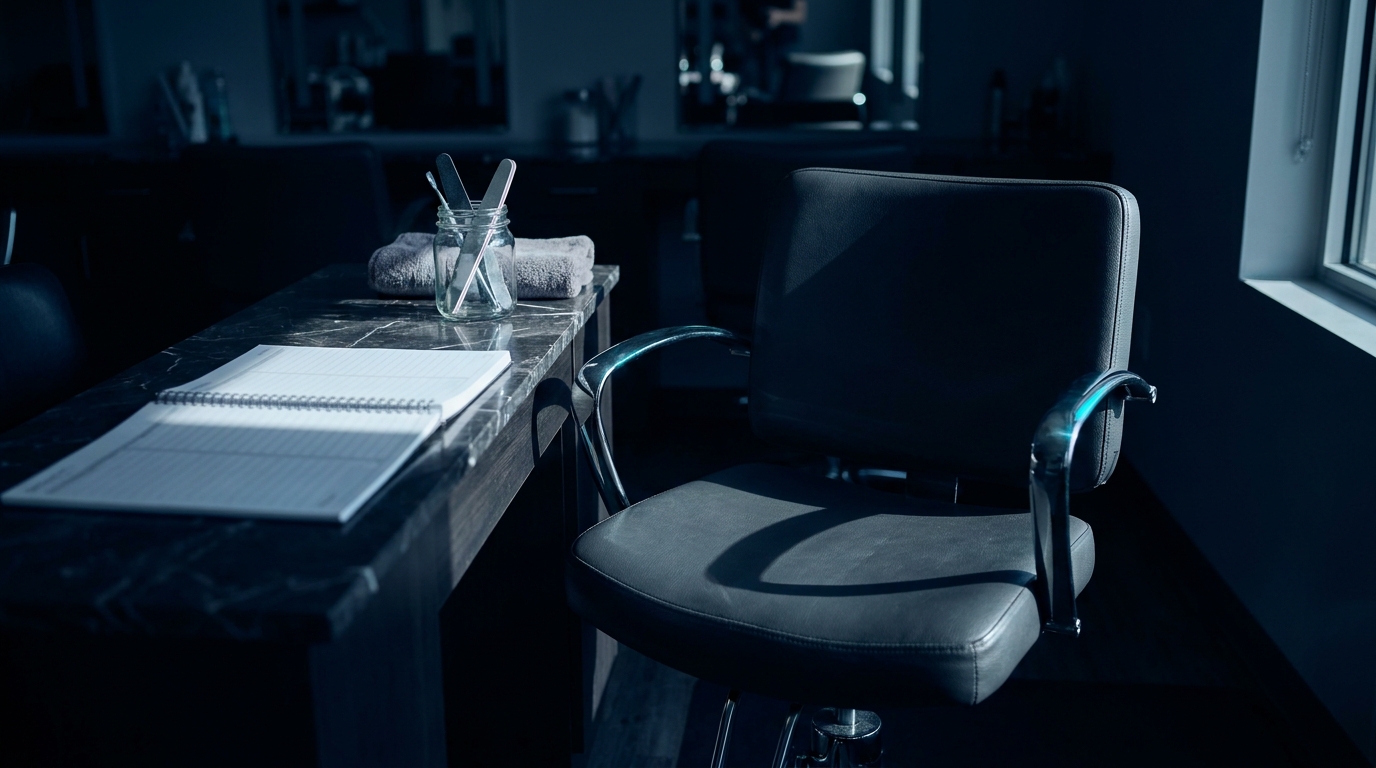
If you run a small salon or beauty studio, you already know the feeling. A client books a Saturday appointment, doesn't show, doesn't answer texts, and the chair sits empty during your busiest hours. The fix isn't a stricter policy — it's a booking system that collects a deposit before the appointment exists.
This post walks through why no-shows keep happening, what actually stops them, and how to roll out a policy without losing loyal clients.
Why is my salon losing so much money to no-shows?
Most small salons underestimate the cost because they only count the missed service. The real number is bigger.
Think about a typical Saturday. A gel manicure with nail art is a $65 service. If two clients no-show in one weekend, that's not $130 lost — that's $130 in revenue plus the walk-in you turned away because the slot was "booked" plus the retail add-on that client would have grabbed on the way out.
A single no-show on a peak Saturday slot is rarely worth less than $100 in total lost revenue when you count the ripple effects.
Do that four times a month across a small team and you're looking at real money — the kind of money that pays a stylist's rent.
What's actually causing the no-shows?
It's tempting to blame "flaky clients." But when we look at how bookings actually flow in small salons, the same structural gaps show up over and over:
- No skin in the game. Booking online takes ten seconds and costs nothing. Skipping it costs nothing either.
- Reminders that don't require a response. A one-way text saying "See you tomorrow!" is easy to ignore.
- A cancellation policy nobody has read. If it lives on a laminated sign at the front desk, it doesn't exist to the client on their phone.
- No easy way to reschedule. When a client's plans change, they should be able to move the appointment in two taps. If they can't, they ghost.
- Missed calls that become no-shows. A client tries to call and cancel, hits voicemail, gives up, and stops thinking about it.
Notice the pattern. Every one of these is a system problem, not a people problem. Which means each one has a fix.
What actually works to stop no-shows?
Based on how the salons running EasySalon operate, here's the short list that moves the needle. In order of impact:
1. Require a deposit at booking
This is the single highest-leverage change. When a client puts $15 or 20% down to hold the appointment, no-show rates drop sharply — not because the deposit is punishing, but because the client is now mentally committed. They picked a time, entered a card, and made a decision.
The deposit gets applied to the final bill. It's not extra money out of pocket. It's just moving the payment forward.
2. Send two-way reminders 24 hours out
A reminder that asks the client to confirm — "Reply YES to confirm or RESCHEDULE to move it" — does two things. It forces a moment of attention, and it flushes out the cancellations you would have found out about at 2 PM on Saturday.
When a client replies RESCHEDULE, the system should immediately offer them the next three open slots. That's when a would-be no-show becomes a filled Tuesday afternoon.
3. Enforce a clear cancellation window
A 24-hour window is standard and defensible. Under 24 hours, the deposit is forfeited. No-show, and the card on file is charged the full service price.
The key word is enforced. A policy nobody enforces is a suggestion. A policy the software enforces automatically is a policy.
4. Answer every call and message
Half of the "no-shows" we see at small salons are actually cancellations that never made it through. The client called during another appointment, got voicemail, tried again later, gave up. An AI receptionist that answers 24/7 in English and Spanish catches those and reschedules them cleanly.
Won't a deposit policy scare off my clients?
This is the question every owner asks, and the honest answer is: a small number of clients will grumble the first time. Almost none of them will actually leave.
Here's why. Every other service they use — the restaurant that took their card for a reservation, the medical office that charges no-show fees, the barber down the street — already does this. Salons are the outlier for still operating on the honor system.
Loyal clients don't mind a deposit. Clients who mind a deposit are the ones who were going to no-show anyway.
The clients who leave over a $15 deposit are the exact clients whose no-shows were costing you money in the first place. Losing them is not a loss.
How do I roll this out without a mess?
A clean rollout takes about two weeks. Here's the sequence:
- Week 1 — Announce it. Post to your Instagram, send an email or SMS to your client list, and put a note in your booking confirmations. Frame it as "we're making sure your favorite times stay available."
- Week 1 — Update your booking system. Turn on deposit collection, set the amount (a flat $15–25 or 20% of the service works well), and configure the cancellation window.
- Week 2 — Train the team. Everyone at the front desk needs to be able to explain the policy in one sentence and process an exception without calling the owner.
- Week 2 — Go live. Grandfather in the appointments already on the books. New bookings require the deposit.
- Ongoing — Measure. Track your no-show rate weekly for the first month. You'll see it move.
Is this legal in Florida?
Charging deposits and no-show fees is standard practice and legal in Florida, provided the client agreed to the policy at the time of booking. That's why the policy needs to be visible on the booking page — not just on a sign at the counter — and why the client should tick a box acknowledging it.
If you take a card on file and charge a no-show fee, the charge needs to match what the client agreed to. Don't invent penalties after the fact. This is where an automated system helps: it can only charge what the policy says it charges.
What if I don't have a booking system that supports this?
This is where most small salons get stuck. The booking tool they started with doesn't handle deposits properly, or it charges a per-transaction fee that eats the deposit, or it doesn't send two-way reminders, or it doesn't work in Spanish for their Spanish-speaking clients.
EasySalon was built for exactly this — deposits at booking, bilingual SMS reminders, enforced cancellation windows, auto-charged no-shows, and tip-out and payroll rolled in. It's live with paying salons in Miami right now.
If you want to see whether it fits how your salon actually runs, we do a free 20-minute walkthrough — no pitch, just a look at your current booking flow and where the money is leaking. Check the pricing here or grab a call directly.
Frequently asked questions
How much should the deposit be?
A flat $15–25 works for most services. For higher-ticket services like extensions or full sets, 20% of the service price is common. The goal is to be meaningful enough to matter, not so high it scares off new clients.
What about walk-ins?
Walk-ins pay the full price at time of service, same as always. The deposit policy only applies to booked appointments.
Do I refund the deposit if the client cancels early?
If they cancel outside your cancellation window (usually 24 hours), yes — either refund it or apply it as a credit to their next appointment. Inside the window, the deposit is forfeited. That's the whole point of the policy.
What if a client has a real emergency?
You still have discretion. The system enforces the default. You override it when it makes sense. That's how every good policy works.
Have a question? Chat with us on WhatsApp.