Tips
Why 95% of AI Agents Never Reach Production (And Fix)
Most AI agents die in the demo phase. Here's why production AI agents fail, and the architecture decisions that get the other 5% live.
AIKoders··4 min read
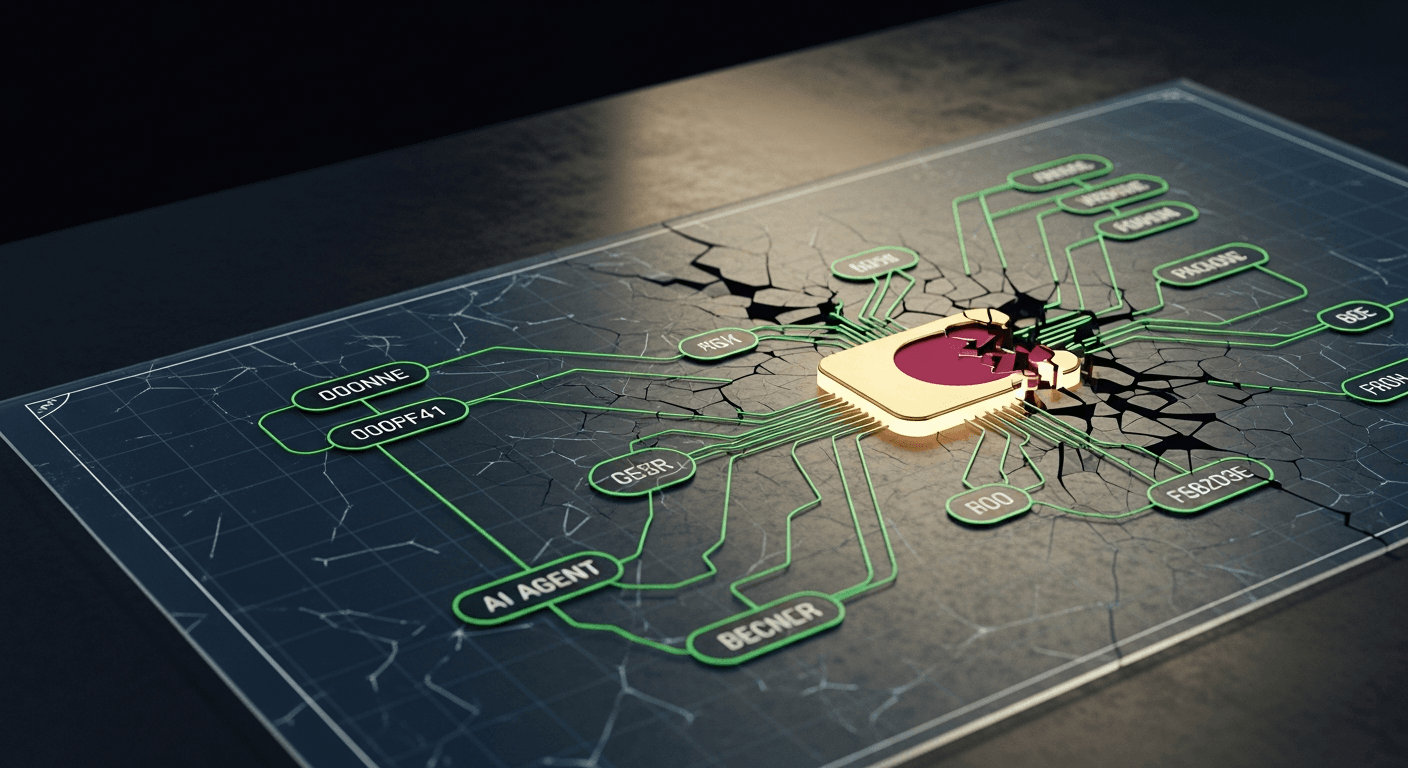
Why 95% of AI Agents Never Reach Production (And How to Fix It)
Here's a number that should stop every founder cold: 88 to 95% of AI pilots never make it to production. They look brilliant in the demo. They die quietly six weeks later. If you've watched this happen, you're not alone — you're in the majority.
The Demo-to-Done Gap Is Wider Than You Think
Composio and MIT both published the same finding in 2026: most AI agents work beautifully on a Tuesday afternoon during a stakeholder presentation. Then they break at 3 AM on a Sunday when nobody's watching. Gartner is predicting that 40% of agentic AI projects will be canceled by 2027.
The reason isn't the model. It's never the model.
"The most consequential factor that determines whether an agent succeeds isn't the model powering it, but the architecture built around it." — The New Stack, May 2026
The Real Reasons AI Agents Fail in Production
After building production AI for nail salons, hotels, distributors, and customer service teams, we keep seeing the same five failure patterns:
- No guardrails. The agent works until a user asks something unexpected, and then it hallucinates a refund policy that doesn't exist.
- No observability. Something breaks and nobody knows for two weeks because there's no logging, no evals, no alerts.
- Brittle integrations. The CRM API changes one field, and the whole agent collapses.
- Schema drift. A real example from May 2026: upgrading n8n from v2.4.7 to v2.6.3 silently broke Vector Store tools, generating invalid JSON for OpenAI calls. Nobody noticed until support tickets piled up.
- Vendor lock-in panic. The agent depends on one provider. That provider has an outage or raises prices, and there's no fallback.
What "Production-Ready" Actually Means
Production-ready is not a marketing word. It's a checklist. If your agent can't answer "yes" to all of these, it's still a demo:
- Does it have eval tests that run in CI before every deploy?
- Does it log every input, output, and tool call with privacy-safe redaction?
- Does it fall back gracefully when a tool, API, or model fails?
- Does it cite its sources so users can trust the answers?
- Does it escalate to a human when confidence drops below threshold?
- Can you swap the underlying LLM in under an hour without rewriting the agent?
Most agents fail at least three of these. The ones that ship to real customers pass all six.
The Architecture That Survives 3 AM
Imagine an AI guest concierge handling 200 hotel rooms across three time zones. A guest in Tokyo asks at 2 AM local time whether the rooftop pool allows children after 9 PM. The agent doesn't know. What happens next defines whether your AI is production-ready.
A demo agent guesses, says "yes" confidently, and the family arrives to find a locked door. One-star review.
A production agent recognizes low confidence, pulls the actual house rules document via a retrieval tool, cites the source in the reply, and — if the document is silent — escalates to the on-call manager via WhatsApp with full context. No guessing. No hallucination. No angry guest.
That difference is not the LLM. It's the architecture: retrieval, citations, confidence thresholds, escalation paths, and observability — all working together.
Why Multi-Vendor Freedom Matters
67% of CTOs now name Model Context Protocol (MCP) their default integration standard, with over 97 million SDK downloads. The reason is simple: businesses are tired of being locked into one AI vendor whose pricing, latency, or availability could change overnight.
At AIKoders we build with 10+ providers — OpenAI, Anthropic, Gemini, DeepSeek, Grok, Microsoft Copilot, Amazon Q, Perplexity, OpenRouter, and more. Not because we're showing off. Because the moment one provider has an outage, your business doesn't stop. The agent routes to the next one and your customers never notice.
The Real Cost of "It Mostly Works"
Here's the math nobody runs. A customer support agent that handles 1,000 conversations a day at 90% accuracy sounds great — until you realize that's 100 wrong answers daily. At a 5% complaint rate, that's 5 escalations a day, 150 a month, and a steadily eroding trust score on every review platform.
An agent at 99% accuracy with proper escalation produces 10 wrong answers, all caught and routed to humans before the customer feels the friction. Same model. Different architecture. Completely different business outcome.
How to Get Into the 5%
If you're starting an AI project — or rescuing one that stalled — the path forward is unglamorous but reliable:
- Tight scope first. One workflow. One success metric. One real user.
- Evals before features. Write the tests before you write the agent.
- Observability from day one. Not after launch. Day one.
- Hardening phase is non-negotiable. Plan for it, budget for it, refuse to ship without it.
- Pick a partner who's shipped before. Demos are easy. Production is engineering.
Ready to Build Something That Actually Ships?
If you've got an AI project stuck between "the demo was great" and "we never launched it," you're exactly who we built AIKoders for. We design, build, and operate production AI agents — with guardrails, evals, and observability included by default. Tell us what you're trying to build, and we'll show you how to get it from demo to done.